A termite exterminator Denver homeowners call is almost always dealing with subterranean termites. Colorado State University Extension notes that several native subterranean species live in the state, and the eastern subterranean termite is the one usually behind damage to buildings. They nest in the soil, travel through pencil-width mud tubes, and feed on the wood of the house from the bottom up. If you've found mud tubes on a foundation wall, soft or hollow trim near the ground, or winged swarmers inside, call (983) 225-1941, say what you found and where, and get connected with an independent local termite pro.

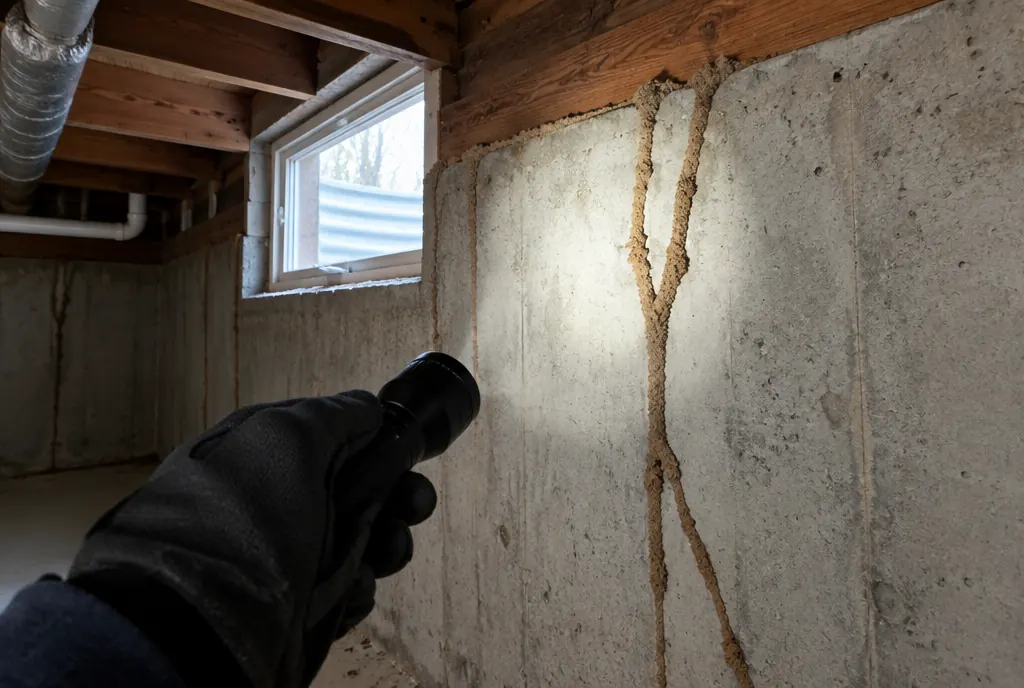
Don't scrape them all off yet. Describe where they run and get a local termite pro to confirm what's active.
Call (983) 225-1941 NowSigns of Subterranean Termites in Denver Homes
Termites stay hidden, so the evidence is indirect. The common ones:
- Mud tubes — thin, brown, earthen tunnels running up a foundation wall, pier, or basement stair stringer. Break a small piece; fresh tubes are moist and may have workers inside.
- Swarmers or wings — winged termites indoors, or a scatter of identical shed wings on a sill or the basement floor.
- Damaged wood — trim, sill plates, or porch framing that sounds hollow, dents easily, or shows layered galleries packed with soil when it's opened up.
- Bubbling paint or drywall low on a wall with no obvious leak.
Swarmers are often confused with flying ants. Termites have straight antennae, a thick waist, and four wings of equal length. If you can, save a few in a sealed bag or jar to describe on the call.
Termite Swarm Season on the Front Range
According to CSU Extension, the eastern subterranean termite swarms in daylight from March to May, usually on a warm day after rain. A swarm in a heated basement can happen earlier, even in winter, because the colony is reacting to the warmth of the house rather than the weather outside. Swarmers found outdoors in a woodpile don't prove the house is involved; swarmers inside, especially in the same room year after year, usually mean a colony is working in or against the structure. The Denver seasonal pest guide covers what else spring tends to stir up.
Why Irrigation Matters in a Dry Climate
Termite pressure here is lower than in warm, humid states, and CSU says structural damage in Colorado has not been very common by comparison. The catch is moisture. Subterranean termites need damp soil, and on the semi-arid Front Range the dampest soil around a house is often the strip right against the foundation, kept wet by sprinklers, drip lines, flower beds, and downspouts that empty onto the ground. Wood mulch piled against siding, a porch skirt touching soil, or firewood stacked on the side of the house gives them a bridge.
That's why older bungalows and Denver Squares in Park Hill, Washington Park, and the Highlands, with wood porches and original sills, come up often, and why newer homes in Central Park, Aurora, and Arvada aren't automatically safe if the landscaping is watered right up to the slab.
Swarmers indoors usually mean a colony nearby. Bag a few, then call and describe where you found them.
Call (983) 225-1941 NowTermite Treatment Options a Denver Pro May Recommend
Liquid soil treatment. A liquid termiticide is applied to the soil along and under the foundation, typically by trenching beside the walls and treating around slab penetrations, to create a treated zone termites cross as they forage. Frozen ground limits this work, so timing can matter in winter.
Bait stations. Stations set into the soil around the perimeter are monitored, and when termites start feeding, a slow-acting bait is added so workers carry it back to the colony. Baiting takes longer to show results and relies on ongoing monitoring visits.
Spot work and corrections. Treating a damaged area directly, removing wood-to-soil contact, and fixing moisture sources. A termite pro will often point out the grading, sprinkler, and mulch changes that make any treatment hold up.
Which method fits depends on the foundation type (full basement, crawlspace, or slab), how far the activity runs, and whether the home has been treated before.
Calling a Termite Exterminator in Denver
Termites work slowly, but they don't stop on their own. A useful call covers what you found and where, what kind of foundation the house has, roughly how old it is, and any past treatment. If you're buying or selling, say so; some buyers and lenders ask for a wood-destroying insect inspection, which is its own appointment. Prices vary widely with method and the size of the foundation, so see the pest control cost guide for typical Denver ranges rather than guessing.
This number is a call-connection service, not a termite company. The pros you speak with are independent businesses that set their own prices; before hiring one, ask for their Colorado Department of Agriculture applicator license number and proof of insurance. Other pest services are listed on the Denver pest removal homepage. Call (983) 225-1941 and get the termite question answered before another spring goes by.
A local termite pro can explain which fits your foundation and how far the activity runs.
Call (983) 225-1941 Now